Friday, 1 July 2011

Thank you KTO ^^

ㅎㅎㅎㅎㅎㅎㅎㅎㅎ  I managed to extend my upcoming trip to 15 days!  Yes Yes!!  A total solid duration of 15 days in my beloved KOREA!!!   9 Oct till 25 Oct!!   I wish I can stay there forever!  Hahahahaaa

“I cannot have beef.”
>> 저는 소고기를 먹지 못합니다

“Do you have pork or chicken?”
>> 돼지 고기나 닭고기 있습니까?

All thanks to KTO(Korea) who taught me this and also gave me very clear explanations to all my questions.   I am going to practise these two sentences real hard ^^  Certainly looking forward to my Issac sandwich!!

KTO is really helpful.  Anyone who has questions to ask about Korea can email to english@knto.or.kr

Saturday, 21 May 2011

ㅋㅋㅋ

선영 taught me what is ㅎㅎ, ㅋㅋ, ㅜㅜ and ㅠㅠ.  Today, I came across more common Korean slang from KOREAN BLOG.  So excited ^^   Here's the list obtained from Korean Language Blog

(1)    ㅎㅎㅎ
Means : hahaha

(2)    ㅋㅋㅋ
Means : kkk (noise of laughter)

(3)    ㅇㅇ
Means : short for 응, which is an informal way to say “yes”.

(4)    ㄴㄴ
Means : "No, No". The Hangul letter ㄴ makes an “n” sound and so this letter is used to represent a shorter way of saying the word “no”, which begins with an “n” sound as well.

(5)    ㅎㅇ
Means : "Hi".  It comes from the word 하이, where the first letter from each syllable is used to make ㅎㅇ.

(6)    ㅂㅇ
Means : "Bye”.  It comes from the word 바이.

(7)    ㅂ2
Also means “bye”. The Hangul letter ㅂ begins with a  “b” sound and so does the word “bye”. Hence that’s why ㅂ is used. The second part of this contracted word is the numeral 2, which in Sino-Korean numbers is pronounced as 이.

(8)    ㅇㅋ
Means "Okay". The ㅇ part of the ㅇㅋ looks like the English letter “o” and the letter ㅋ represents the “k” sound in okay.

(9)    ㅜㅜ or ㅠㅠ
Indicates crying or tears. The horizontal line in that looks like this ㅡ in ㅜ or ㅠ symbolizes the person’s face. The vertical line(s) are the tears streaming down the person’s face.

(10)  ㅇㅜㄴ
Means : "Disappointment" or "Discouragement". The ㅇ  is the person’s head and ㅜ  is the person’s body. The ㄴ is the person’s knees on the floor. All together it represents someone with their hands and knees on the floor in frustration or disappointment.

Saturday, 14 May 2011

I love Dalki

I love Dalki.  Her big red hair caught my attention and I didn't know she is a popular Korean cartoon character in Korea until one fine day...No wonder it was love at first sight ^^  Simply becos its Korea ㅋㅋ

One thing Dalki and I have in common - we are Gemini ^^
Dalki is the title character of the franchise. She is a a troublemaker, but she is often portrayed as having a kind heart and teaching important lessons. Many of the characters in Dalki are usually seen wearing some kind of fruit costume. Dalki, which means "strawberry" in Korean, wears a strawberry shaped hat.

Character:
She shoes various tastes and styles to friends.
She is especially interested in unique fashion style and spends inconsistent lifestyle.
She believes that she has telepathy.  She has many talents and imaginative power.
She sometimes creates accidents and troubles, however she also troubleshoots troubles of others. (Most of the time, she is troublesome.)    
 She often gets absorbed to heroin of cartoon or movie.
She likes boy friend, Subak.  However, she also ignores him and is very capricious.

 
Banana
A selfish boy with long, yellow hair, Banana is often portrayed as playing music and being somewhat elitist. He is, however, susceptible to loneliness.
Dolbam
A good friend to Subak, (chestnut) is considered to be bold and positive.   However, he is afraid of puppies.
                        
Dongchimee
Dongchimee is a stranger who lives separate from the others. Basically he is a big, yellow man who loves poop. He thinks it is so great that he collects it, makes art from it, and even keeps it on his head at all times. "Ddong" is Korean for "poop" and "chimee" may mean poke or stick. This probably refers to the Korean prank of ddongchim - severe poking in the delicate derriere area.


Lemon
The other main female character, Lemon fills the role of Dalki's good friend. She is known to be sort of a crybaby, and a bit stubborn as well, but she is also philosophical and kind.


Subak
Subak, meaning "watermelon", is the main love interest of Dalki. He is seen as simple, but he is also very popular.


Love story of Dalki Princess & Banana Prince
For Dalki princess and Banana prince, there has been a proposal of marriage by their parents. But long time ago, to Dalki princess.. She has been captivated by a man has danced with only one time who is a neighboring prince. Therefore, she doesn't open her mind to Banana prince and has been in one-sided love with neighboring prince thinking only his smile. Since Dalki thinks she could meet him someday, Dalki is always preparing meeting him adorning herself (Yoga, Ballet, Swim, Suntan, Cooking, Knitting, Shopping, Singing, Collecting shoes, Studying various hairstyle and so on)
However, Banana prince falls in love one-sidedly with Dalki because of her adorning herself. As time goes by, Banana prince' love toward her is getting bigger and bigger as watching her from afar. He thinks Dalki would understand his mind someday so that he tries to be reborn as a splendid prince researching her favorite fashion style, doing exercise for a well proportioned figure, collecting nice shoes and learning musical instruments such as guitar.
Dalki is only in love one-sidedly with neighboring prince but the prince doesn't know that. Thus Dalki is sometimes very nervous and wreak her anger on her pet, Dalgu, although she is a good-natured and warm-hearted person. Kind-hearted pet Dalgu fathoms Dalki's mind better than anybody and helps her over all. Since Dalki knows Dalgu's heart, she thinks Dalgu is her best friend and adorns it but each time she gets rid of her stress of one-sided love by wreaking her anger on it.
Subak who loves Dalki is a soldier guarding the kingdom of Dalki. Dolbam is a soldier of the kingdom of Banana. Because Dolbam loves sister of Banana, Lemon, he tries to find favor with Banana providing Dalki's information to Banana prince by harassing Subak and shadowing Dalki. Lemon likes Dalki. She is womanly and shy person and easily moved to tears. Lemon also loves Dolbam but she knows there can not be love between them because of class differences so that she doesn't express her feeling and hurt by herself. She sometimes open her heart to cat, Dalangi which comes to see her.
It seems that Dongchimee often appears for no reason, to tell the truth, he is very important character who brings a reversal of the play (As a grandfather of president who Dalki loves or the king of the kingdom..Happenings and episodes happened in the meanwhile are shown concretely, it is used for merchandising.)


Information extracted from http://www.dalkiworld.com

Thursday, 5 May 2011

어린이날 - 5 May

Its Children's day in Korea and Japan today.  What's more, its a national holiday!  Woww....
In Japan, it is a day set aside to respect children's personalities and to celebrate their happiness. It was designated a national holiday by the Japanese government in 1948.

While in Korea, it was founded by the Korean children's writer Pang Chong-hwan in 1923 as a way to instill in the children a sense of independence and national pride.
Children's Day highlights the dignity of children and their need for love, care, and respect.  It is also a day to honor adults that have contributed to improving the lives of children.   Children of all ages are celebrated during Children's Day and the entire community is involved in the festivity. Many cities have parades and public activities and museums, zoos, amusement parks, and movie theaters offer free admission to children.  Traditional games, such as yut are played. Gifts are given to children from their parents and from stores that the children visit during Children's Day.


선영 and her husband brought the boys to Footprint Park today.  Footprint park is a simple park for jogging and taking a stroll.  Today, there is a flea market and many activities by private organisations.  
She sent me pictures of Sang Yoon in the park.  Ha!  I believe children in Singapore would love to have their children's day celebrated in this manner, and adults would be most happy to have this as a public holiday too.

Monday, 2 May 2011

가을은 빨리 오지

Its 2 May 2011 today.  Almost half a year has passed by...What have I achieved so far?  인생에서 어떤 것들은 여전히​​ 침체입니다.  하지만 난 하나님께 감사 ^^

Have been doing lots of 숙제 since last Dec to make my long time dream come true in this 가을.   Many thanks to 선영 who has given me some very useful information in my planning.  Wish I can have a long stay in 서울...내가 만약 한국에서 일할 수....16 days..nope to be exact, its only 14 days in 서울 which is definitely not enough for me...

선영 told me May is a Family month in Korea because 5 May is Children's Day.  While 8 May is Parents' Day  and 15 May is Teachers' Day.  Its a month of presents!  Sounds like X'mas ^^

Sunday, 1 May 2011

Shinee Appa in "Hello Baby"


Thanks to Kim for this ^^
This is one of my favorite episodes in "Hello Baby" for Shinee Appa.
I think I have watched this a thousand time and laughed over it whenever I watched!

Fortune telling street at Mia-ri


Divination houses (or yokhagwons) in Mia-ri

Mia-ri, a small street in the northern part of Seoul, has long been a go-to spot for Koreans searching for a bit of comfort and reassurance from the words of fortune-tellers.

The neighborhood is so well known for its fortune-telling businesses by the Blinds.  What distinguishes Mia-ri, by far the most famous and most well-known in the country, from other areas is that all the area practitioners are blind. Since the street made its name, a number of non-blind fortune-tellers tried to open their shops, but to no avail. All faced fierce opposition from blind peers.

“This is a very close-knit society where everybody knows everybody,” said Kim Ik-joong, another longtime Mia-ri fortune-teller. “Mia-ri is the base of our livelihood, and we never let others come into our market.”

Getting there: Subway line 4 Sungshin Women’s University Station, Exit No 7


Personally, I always enjoy trying out different types of readings whenever I go overseas.  Be it fortune telling, tarot card reading, rune reading etc...Its interesting to see the various methods used in different countries. At the end of the day, I believed its important to apply own wisdom(deep down) and faith in my own religion to interpret what was being shared to me.  So far, all led to the same prediction! Ha! 
I wonder if the fortune tellers in Seoul can speak English.  I would love to have a go during my trip this Autumn ^^

Saturday, 30 April 2011

I Love SHINEE ^^


샤이니 shines FOREVER!!

I Love SHINEE ^^


                 Never grow sick and tired of watching Shinee!!

Monday, 25 April 2011

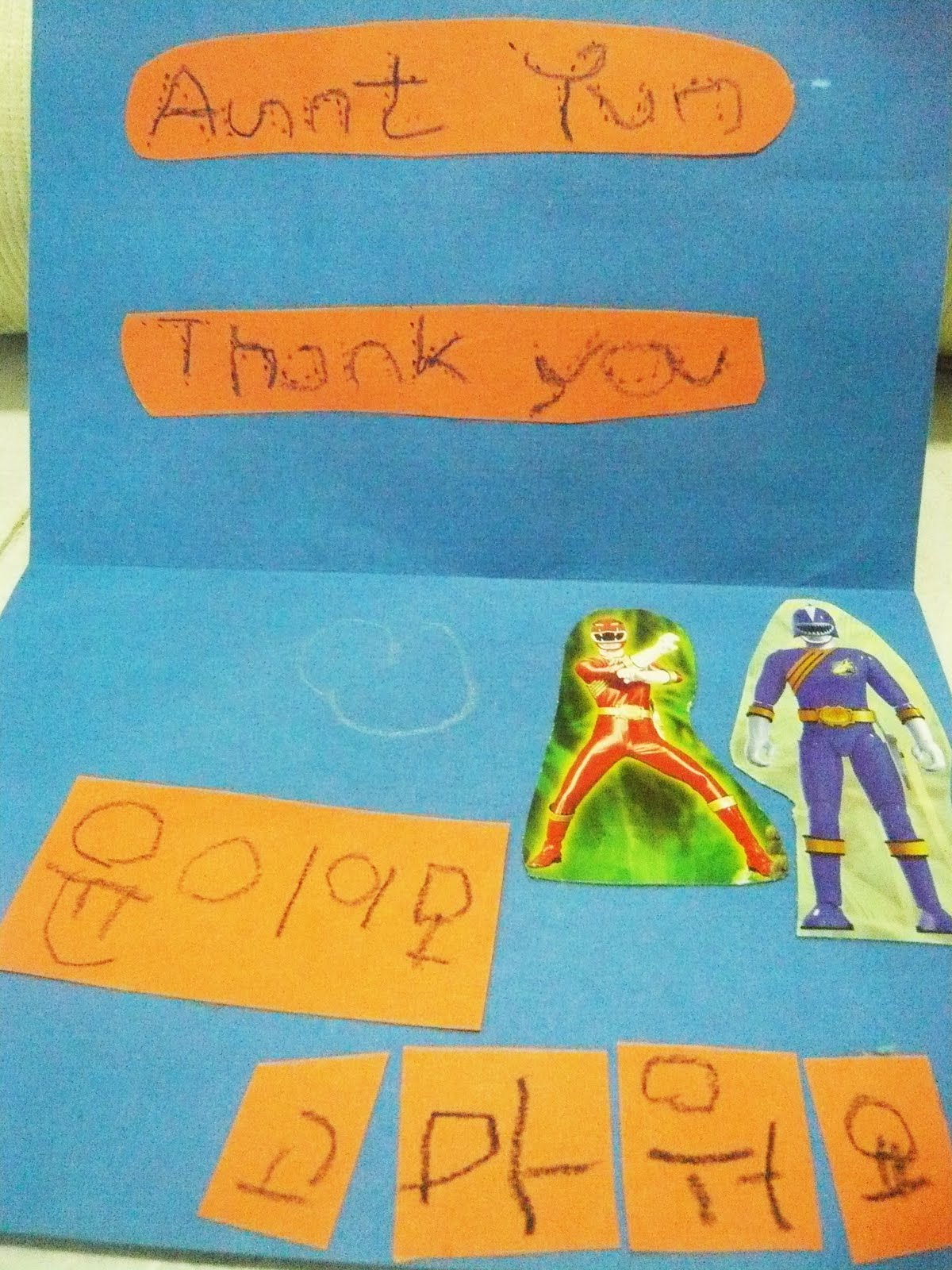
From cute Sang Yoon ^^

 Sweet Sang Yoon sent me a card, handmade by him.  How sweet of him ^^ 
 Sang Yoon : 내가 정말 좋아요. 잘했어요!  정말 감사합니다 ^^


Waaooo....Sang Yoon is really serious in his work ^^
Seon Young : You must be proud of him ^^ I am proud of him too!


Power Ranger is Sang Yoon's favorite!

Sunday, 24 April 2011

Village of ants(Gaemi)

Gaemi (Ant) Village, Hongje-dong is one of the city's few remaining daldongnae(run-down “moon-side” villages). The village sprouted up in the aftermath of the Korean War (1950-53) and it was where the poor started settling down.

Many lived in shabbily constructed tents that resembled Native American tepees in Western movies, and so the area was nicknamed, ``Indian Town.'' It then became known as Ant Village after the hardworking residents.
High up on the northwest slope of Mt. Inwangsan sits Gaemi Maeul—literally meaning “Ant Village.” Saved from development by the steep gradient on which it is located, Gaemi Maeul retains the character of neighborhoods that sprang up throughout Seoul during Korea’s years of rabid urbanization in the 1960s and 1970s.   This nostalgic atmosphere has made it popular as a location for shooting films and TV dramas, and even gotten it designated by Mapo Ward as a special cultural zone.   Narrow concrete flights of steps wind up between the terraced arrangements of single-story houses that look out onto the rest of the city far below. Cats lounge apathetically on the rooftops, eyes half open. 

Last August, with the consent of residents, Seodaemun-gu government, Kumho Construction and 128 volunteers from five universities have given the area a facelift. The project did not build new houses but art students embellished exteriors with thematic drawings and logos representing family, hope and eco-friendliness.Rather than being a tourist destination in its own right, Gaemi Maeul makes a great alternative starting point for a hike over Mt. Inwangsan, meeting the old city wall and following it downhill in a northeasterly direction to Buam-dong, another hilltop neighborhood with good places to eat and drink. Try Rabia for some pasta and pizza, or Club Espresso for an excellent selection of coffees roasted in-house and cookies.


More info
Rabia | (02) 395-5199 | Open: noon—10:30pm, 7 days/week (last orders 9pm)
Club Espresso | (02) 764-8719 | Open: 9am—11pm (last orders 10:30pm)

Getting there
Hongje Station, Line 3, Exit 2. Take maeul bus No. 7 from outside KFC, between Exits 1 and 2 of the subway station. Get off soon after the bus starts to climb the road into the village.
If you’re heading over the mountain, follow the road through the village until it ends at a park. Carry on up along the path, following the signs to Gicha-bawi Ridge. Follow the path over the granite mountaintop and across a short saddle to meet the old city fortress wall. Turn left and follow the base of the wall downhill. The path is a bit hairy. When you reach an iron walkway, climb it to the other side of the fortress wall. The path becomes much better—just follow it down to Buam-dong
.
(Above is an interesting article which I came across at  http://www.seoulselection.com/seoul/?p=1061
Wish I can visit this place....)